What is the turning radius of a sub compact excavator?
As a supplier of sub compact excavators, I often receive inquiries about various technical specifications of these machines, and one question that comes up quite frequently is, "What is the turning radius of a sub compact excavator?" In this blog post, I'll delve into this topic to provide you with a comprehensive understanding of the turning radius of sub compact excavators, its significance, and how it impacts the performance and usability of these machines.
Understanding the Turning Radius
The turning radius of an excavator is a crucial parameter that defines the minimum space required for the machine to make a complete turn. It is typically measured from the center of the machine's rotation point to the outermost point of the machine's body during a turn. In the case of sub compact excavators, which are designed for use in tight spaces and small job sites, the turning radius is especially important.
There are two main types of turning radius to consider: the inside turning radius and the outside turning radius. The inside turning radius refers to the radius of the circle that the inner side of the machine's tracks or wheels follows during a turn. The outside turning radius, on the other hand, is the radius of the circle that the outer side of the machine's tracks or wheels follows.
Significance of the Turning Radius
The turning radius of a sub compact excavator has a significant impact on its maneuverability and usability in different work environments. A smaller turning radius allows the excavator to operate in confined spaces, such as narrow alleys, backyards, and indoor construction sites. This is particularly important for tasks like landscaping, small-scale excavation, and utility work, where space is often limited.


For example, if you are working on a landscaping project in a small backyard, a sub compact excavator with a small turning radius can easily navigate around trees, shrubs, and other obstacles. It can also perform tasks like digging trenches and moving soil without causing damage to the surrounding landscape.
In addition to maneuverability, the turning radius also affects the efficiency of the excavator. A machine with a smaller turning radius can complete turns more quickly, which reduces the time spent on each task. This can lead to increased productivity and lower operating costs.
Factors Affecting the Turning Radius
Several factors can influence the turning radius of a sub compact excavator. These include the machine's design, the length of its tracks or wheels, and the position of its center of gravity.
- Machine Design: The design of the excavator plays a crucial role in determining its turning radius. Some sub compact excavators are designed with a compact and streamlined body, which allows them to make tight turns. Others may have a more traditional design with a larger body, which can result in a larger turning radius.
- Track or Wheel Length: The length of the tracks or wheels also affects the turning radius. Longer tracks or wheels generally result in a larger turning radius, while shorter tracks or wheels can reduce the turning radius.
- Center of Gravity: The position of the excavator's center of gravity can also impact its turning radius. A machine with a lower center of gravity is more stable and can make turns more easily, which can result in a smaller turning radius.
Turning Radius of Our Sub Compact Excavators
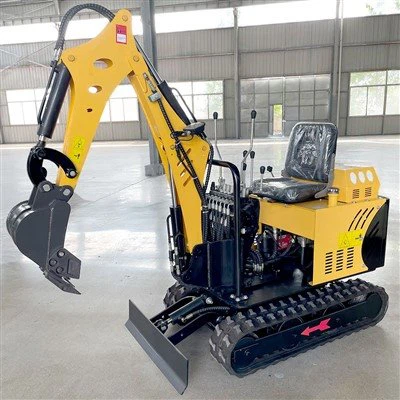
At our company, we offer a range of sub compact excavators with different turning radii to meet the needs of various applications. Our Small Home Excavator is designed for use in residential and small commercial projects. It has a compact design and a small turning radius, which makes it ideal for working in tight spaces.
Our Mini Crawler Excavator for Landscaping is another popular option. It is specifically designed for landscaping projects and has a turning radius that allows it to navigate around trees, shrubs, and other obstacles with ease.
For more heavy-duty applications, we offer the Rugged 2 Ton Mini Excavator. This machine has a larger turning radius than our smaller models, but it is still capable of operating in relatively confined spaces.
Conclusion
The turning radius of a sub compact excavator is an important factor to consider when choosing a machine for your project. A smaller turning radius allows the excavator to operate in tight spaces and increases its maneuverability and efficiency. At our company, we offer a range of sub compact excavators with different turning radii to meet the needs of various applications.
If you are interested in learning more about our sub compact excavators or have any questions about the turning radius, please feel free to contact us. Our team of experts is available to provide you with more information and help you choose the right machine for your project.
References
- Manufacturer's specifications for sub compact excavators
- Industry standards and guidelines for excavator design and performance