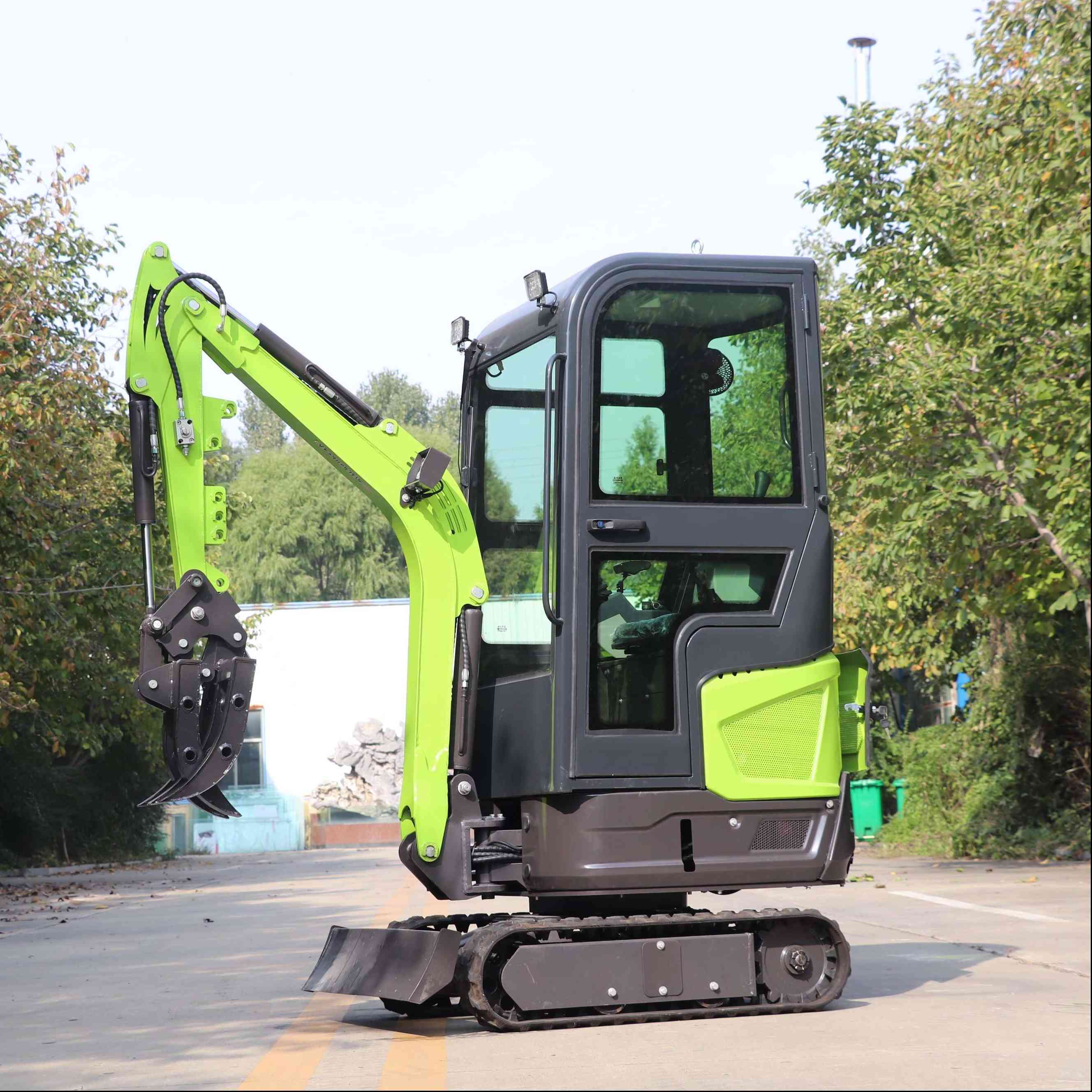
In the dynamic world of construction and excavation, the fully functional mini excavator has emerged as a versatile and indispensable tool. As a supplier of these remarkable machines, I've had the privilege of witnessing their transformative impact on various projects, from small - scale home renovations to larger commercial undertakings. One crucial aspect that often fascinates operators and potential buyers alike is how to effectively control the attachments on a fully functional mini excavator.
Understanding the Basics of Mini Excavator Attachments
Before delving into the control mechanisms, it's essential to understand the different types of attachments available for a fully functional mini excavator. These attachments significantly enhance the machine's versatility, allowing it to perform a wide range of tasks. Common attachments include buckets, hydraulic breakers, augers, and grapples. Each attachment serves a unique purpose; for instance, buckets are used for digging and moving materials, hydraulic breakers are ideal for breaking up concrete and rock, augers are used for drilling holes, and grapples are useful for handling and moving large objects.
The choice of attachment depends on the specific requirements of the project. As a supplier of Fully Functional Mini Excavator, I often assist customers in selecting the right attachments based on their project scope and site conditions.
The Control System of a Mini Excavator
The control system of a fully functional mini excavator is designed to be intuitive and user - friendly. It consists of several key components, including joysticks, pedals, and switches. These controls are ergonomically placed within easy reach of the operator, ensuring comfortable and efficient operation.


The joysticks are the primary means of controlling the movement of the excavator and its attachments. Typically, there are two joysticks: one for controlling the arm and the boom, and the other for controlling the rotation of the upper structure and the movement of the bucket or other attachments. The left joystick usually controls the arm's in - and - out movement and the rotation of the upper structure, while the right joystick controls the boom's up - and - down movement and the angle of the bucket.
Pedals are used to control the tracks of the excavator, enabling forward, backward, and turning movements. They provide precise control over the excavator's position, allowing the operator to maneuver in tight spaces with ease.
Switches are used to engage and disengage various functions, such as the hydraulic system for the attachments. These switches are usually located on the control panel within the operator's cabin. Some switches are used to adjust the flow rate and pressure of the hydraulic fluid, which is crucial for the proper operation of different attachments.
Controlling Different Attachments
1. Buckets
Buckets are the most commonly used attachment on a mini excavator. Controlling a bucket is relatively straightforward. To dig, the operator uses the right joystick to lower the boom, followed by the left joystick to curl the arm and scoop up the material. To dump the material, the operator reverses the process, using the left joystick to extend the arm and the right joystick to raise the boom and tilt the bucket forward.
The key to efficient bucket operation is to maintain a smooth and coordinated movement. The operator needs to be aware of the bucket's capacity and the type of material being dug. For example, when digging in soft soil, a faster digging cycle can be maintained, while in hard - packed soil or gravel, more force may be required, and the digging speed should be adjusted accordingly.
2. Hydraulic Breakers
Hydraulic breakers are a powerful attachment used for breaking up hard materials such as concrete and rock. Before using a hydraulic breaker, the operator must ensure that the excavator is properly stabilized. This is usually done by extending the outriggers to provide a firm base.
To operate the hydraulic breaker, the operator engages the hydraulic system using the appropriate switch on the control panel. The breaker is then lowered onto the target material using the joystick controls. The force of the breaker can be adjusted by controlling the flow rate and pressure of the hydraulic fluid. The operator needs to move the breaker around the target area to ensure even breaking.
During operation, it's important to monitor the breaker's performance. If the breaker is not working effectively, it may be necessary to adjust the pressure or check for any blockages in the hydraulic system. Operators should also follow safety guidelines, such as wearing appropriate personal protective equipment.
3. Augers
Augers are used for drilling holes, which are commonly required for tasks like installing fence posts or tree - planting. To use an auger attachment, the operator first aligns the auger vertically with the drilling location. This can be done using the joystick controls to position the auger over the target area.
Once the auger is in position, the operator engages the hydraulic system to start the rotation of the auger. The speed of rotation and the downward pressure can be adjusted using the controls on the panel. As the auger drills into the ground, the operator needs to monitor the depth of the hole. When the desired depth is reached, the operator reverses the rotation of the auger and raises it out of the hole.
It's important to note that different types of soil may require different auger speeds and pressures. For example, in soft soil, a higher speed and lower pressure may be sufficient, while in hard soil or rock, a lower speed and higher pressure may be needed.
4. Grapples
Grapples are used for handling and moving large objects. To control a grapple, the operator uses the joystick to position the grapple over the object. Once in position, the hydraulic system is engaged using a switch, and the grapple closes around the object. The operator can then use the joystick controls to lift, move, and place the object as required.
When using a grapple, it's crucial to ensure that the object is securely grasped. The operator should also be aware of the weight capacity of the grapple and the excavator. Overloading can cause damage to the machine and pose a safety risk.
Importance of Operator Training
Proper operator training is essential for the safe and efficient control of attachments on a fully functional mini excavator. As a supplier, I often emphasize the need for operators to undergo comprehensive training programs. These programs cover not only the basic control mechanisms but also safety procedures, maintenance requirements, and troubleshooting techniques.
A well - trained operator can maximize the performance of the mini excavator and its attachments, reducing the risk of accidents and downtime. Training programs may include both theoretical and practical components, allowing operators to gain hands - on experience with different attachments and operating scenarios.
Factors Affecting Attachment Control
Several factors can affect the operator's ability to control the attachments on a mini excavator. One of the most important factors is the Mini Excavator Weight. The weight of the excavator provides stability during operation. A heavier excavator is generally more stable, especially when using powerful attachments such as hydraulic breakers. However, a heavier machine may also be less maneuverable in some situations.
The type of terrain also plays a significant role. On uneven or soft terrain, the operator may need to adjust the control inputs to ensure that the excavator and its attachments operate safely. For example, when working on a slope, the operator needs to be careful not to overload one side of the machine, which could cause it to tip over.
The condition of the mini excavator and its attachments also affects control. Regular maintenance, such as checking the hydraulic system, lubricating moving parts, and inspecting for wear and tear, is essential for optimal performance. Faulty components can lead to erratic control and reduced efficiency.
Choosing the Right Mini Excavator for Your Needs
When it comes to choosing a fully functional mini excavator, there are several options available. If you're looking for a machine for small - scale household tasks, a Small Household Excavator or a Small Home Excavator may be the right choice. These machines are compact, easy to maneuver, and can handle a variety of light - duty tasks.
For more demanding projects, a Mini 1 Ton Excavator or a larger model may be required. These machines offer more power and greater lifting capacity, allowing them to handle heavier attachments and more challenging tasks.
Contact Us for Your Mini Excavator Needs
Whether you're a professional contractor or a DIY enthusiast, finding the right fully functional mini excavator and its attachments is crucial for the success of your project. As a reputable supplier, we offer a wide range of high - quality mini excavators and attachments to meet your specific requirements.
If you have any questions about our products, need help in selecting the right attachment for your mini excavator, or are interested in purchasing a machine, we encourage you to reach out to us. Our team of experts is always ready to assist you in making informed decisions and ensuring that you get the most out of your investment.
References
- Construction Equipment Handbook
- Mini Excavator Operation Manuals
- Industry - specific research papers on excavator technology