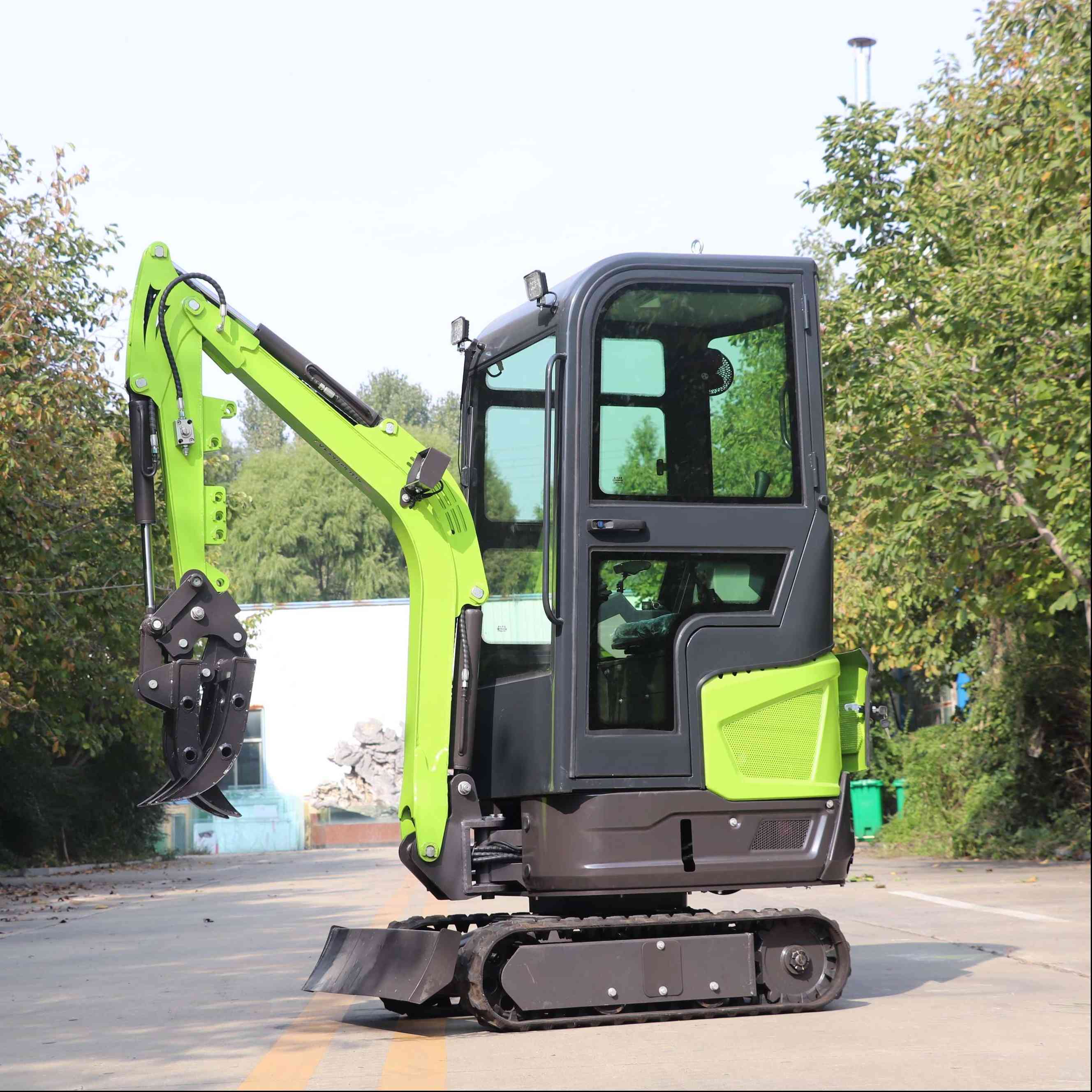
Hey there, fellow construction enthusiasts! I'm a supplier from Mini Excavator Work, and today I'm gonna walk you through how to calibrate the sensors of a mini excavator in work. It's a crucial process that can significantly impact the performance and safety of your machine.
First off, let's talk about why sensor calibration is so important. Mini excavators rely on a bunch of sensors to function properly. These sensors measure things like pressure, position, and temperature. If they're not calibrated correctly, the excavator might not operate as it should, leading to inefficiencies, potential breakdowns, and even safety risks.


Before we start the calibration process, make sure you've got the right tools. You'll typically need a multimeter to measure electrical signals, a pressure gauge for hydraulic sensors, and sometimes a special calibration device provided by the manufacturer.
Let's start with the pressure sensors. These sensors are used to monitor the hydraulic pressure in the excavator's system. To calibrate them, first, locate the pressure sensor on the hydraulic circuit. It's usually near the hydraulic pump or the control valves.
Turn off the excavator and release any pressure in the hydraulic system. Connect the pressure gauge to the sensor port. Then, start the excavator and gradually increase the hydraulic pressure. Compare the reading on the pressure gauge with the reading on the excavator's control panel. If there's a difference, you'll need to adjust the sensor calibration.
Most modern mini excavators have a calibration mode in their control system. Enter this mode and follow the on - screen instructions to adjust the sensor readings until they match the pressure gauge. This might involve adjusting some parameters or settings within the control system.
Next up are the position sensors. These sensors are used to determine the position of the boom, arm, and bucket. They're essential for accurate digging and positioning.
To calibrate the position sensors, start by extending the boom, arm, and bucket to their fully extended positions. Then, use a measuring tape or a laser distance meter to measure the actual length and angle of each component.
Compare these measurements with the readings on the excavator's control panel. If there's a discrepancy, enter the calibration mode in the control system. You'll be able to adjust the sensor readings to match the actual measurements.
For example, if the control panel shows that the boom is at a certain angle, but your measurement shows a different angle, you can use the calibration function to correct the reading.
Temperature sensors are also important in a mini excavator. They monitor the temperature of the engine, hydraulic fluid, and other components. Incorrect temperature readings can lead to overheating or under - performance.
To calibrate the temperature sensors, you'll need a thermometer. Measure the actual temperature of the component (like the engine coolant or hydraulic fluid) using the thermometer. Compare this reading with the reading on the excavator's control panel.
If there's a difference, enter the calibration mode and adjust the sensor settings until the readings match. This ensures that the excavator can respond correctly to temperature changes and prevent damage to the components.
Now, let's talk about some tips to make the calibration process go smoothly. First, always refer to the manufacturer's manual. It'll have specific instructions for your mini excavator model. Also, make sure you're working in a safe environment. Turn off the engine and release all pressures before starting any calibration work.
Another important thing is to keep records of the calibration process. This includes the before and after readings, the adjustments made, and the date of calibration. These records can be useful for maintenance and troubleshooting in the future.
At Mini Excavator Work, we offer a range of high - quality mini excavators, such as the Narrow Mini Digger, the 25 Hp Mini Excavator, and the Versatile 3 Ton Mini Excavator. These machines are designed with advanced sensor technology, and proper calibration is key to getting the most out of them.
If you're in the market for a mini excavator or need more information on sensor calibration, don't hesitate to reach out. We're here to help you make the right choice and ensure your machine operates at its best.
Calibrating the sensors of a mini excavator is a vital process that requires attention to detail and following the right procedures. By doing it correctly, you can improve the performance, efficiency, and safety of your mini excavator. So, take the time to calibrate your sensors regularly and keep your machine running smoothly.
If you have any questions or are interested in purchasing one of our mini excavators, feel free to contact us. We're always happy to assist you with your construction needs.
References:
- Manufacturer's manuals of mini excavators
- Construction equipment maintenance guides